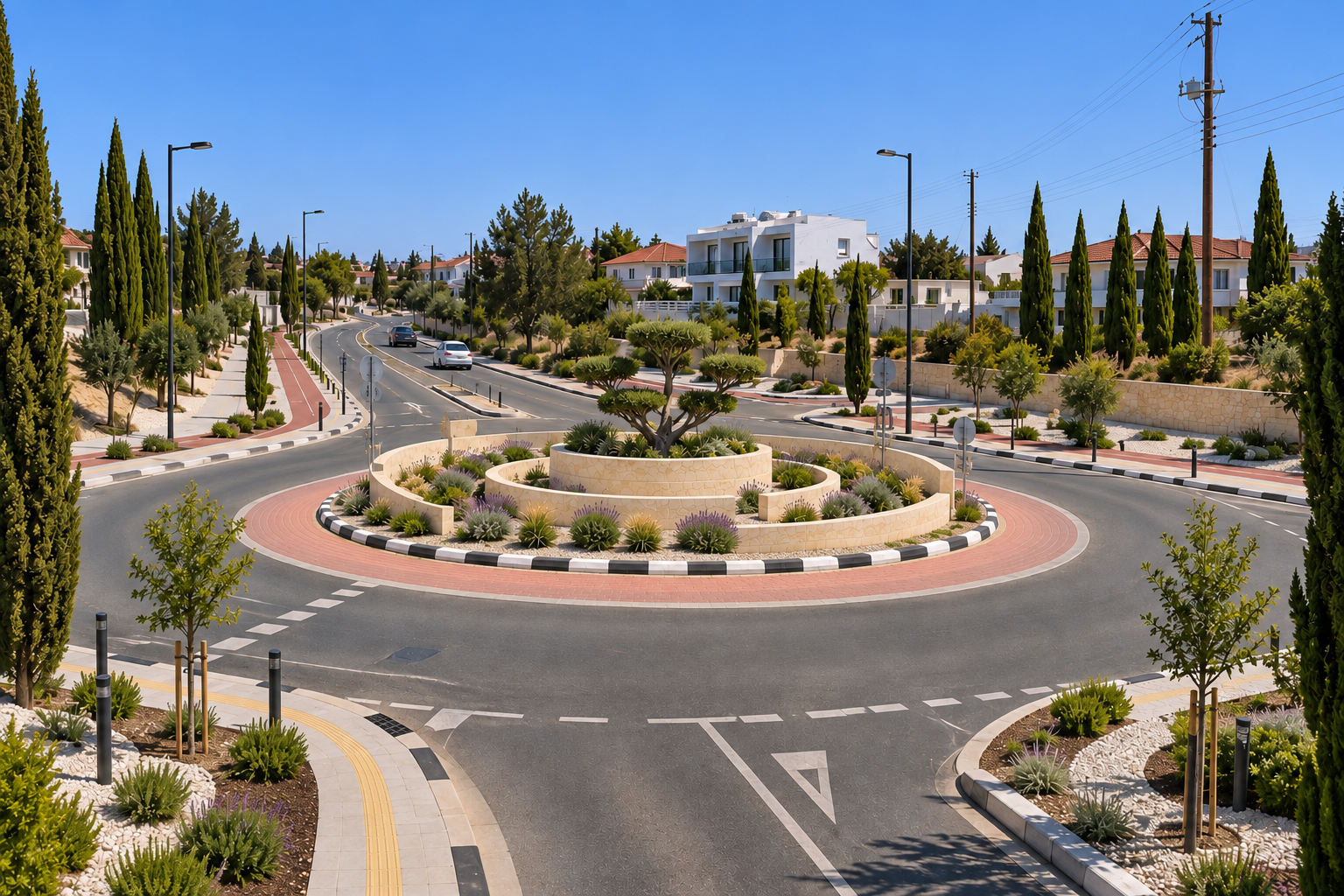
Roundabout
A study in movement
and perception.
Experience research
The roundabout
as a moving image.
A roundabout is never perceived from a fixed point. It is encountered in fragments: on approach, through rotation, at changing speed and through repeated return.
The proposal begins with this unstable viewpoint. Rather than treating the centre as an object to be observed, it composes stone, planting, shadow and light as a sequence that becomes legible through movement. Curved planes overlap and separate; views open and close; the same place is continuously reconstructed by the position of the viewer.
What is ordinarily a residual traffic space becomes a temporal landscape — experienced briefly, repeatedly and collectively as part of everyday passage.
Geometry
made measurable.
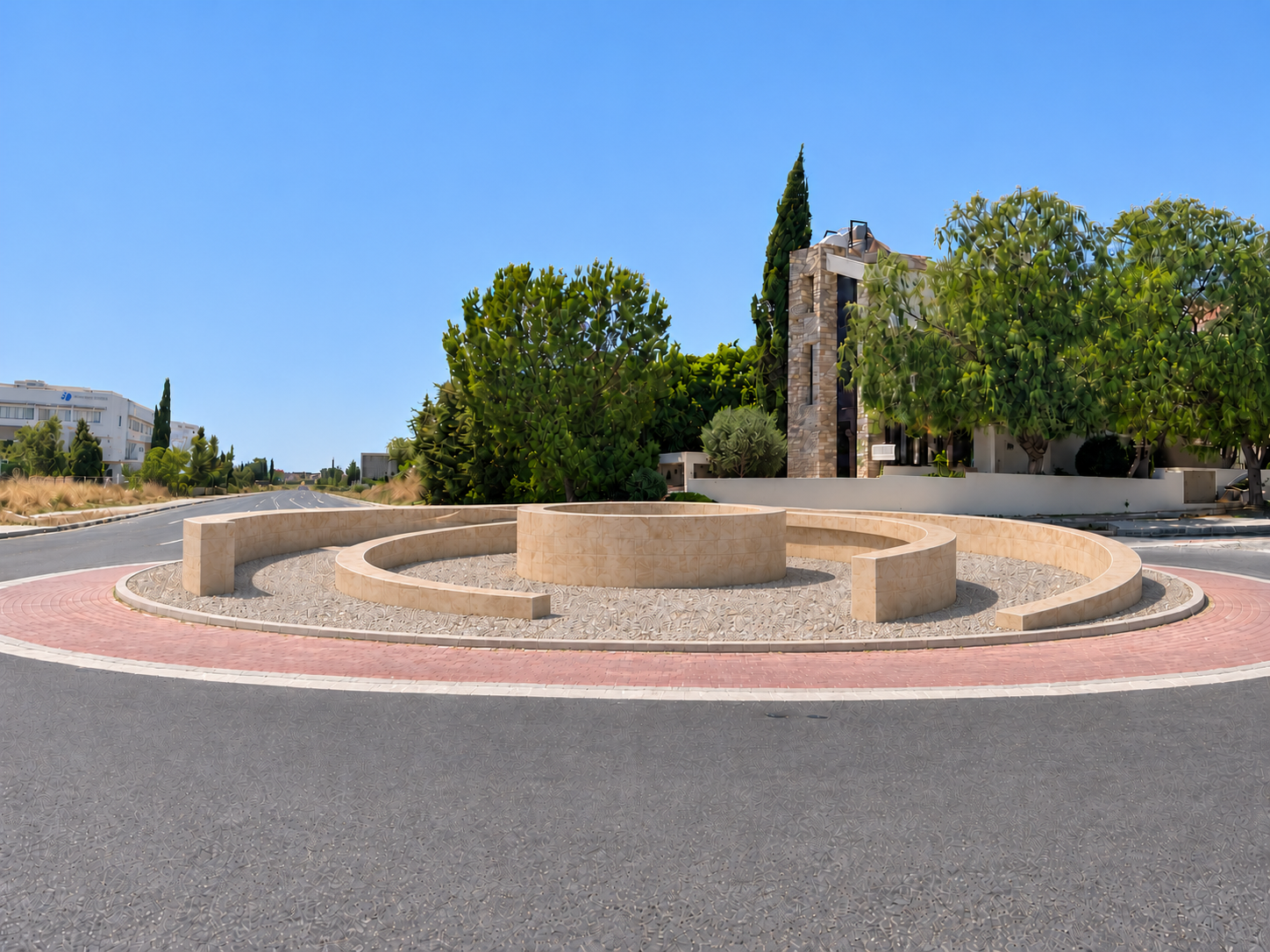
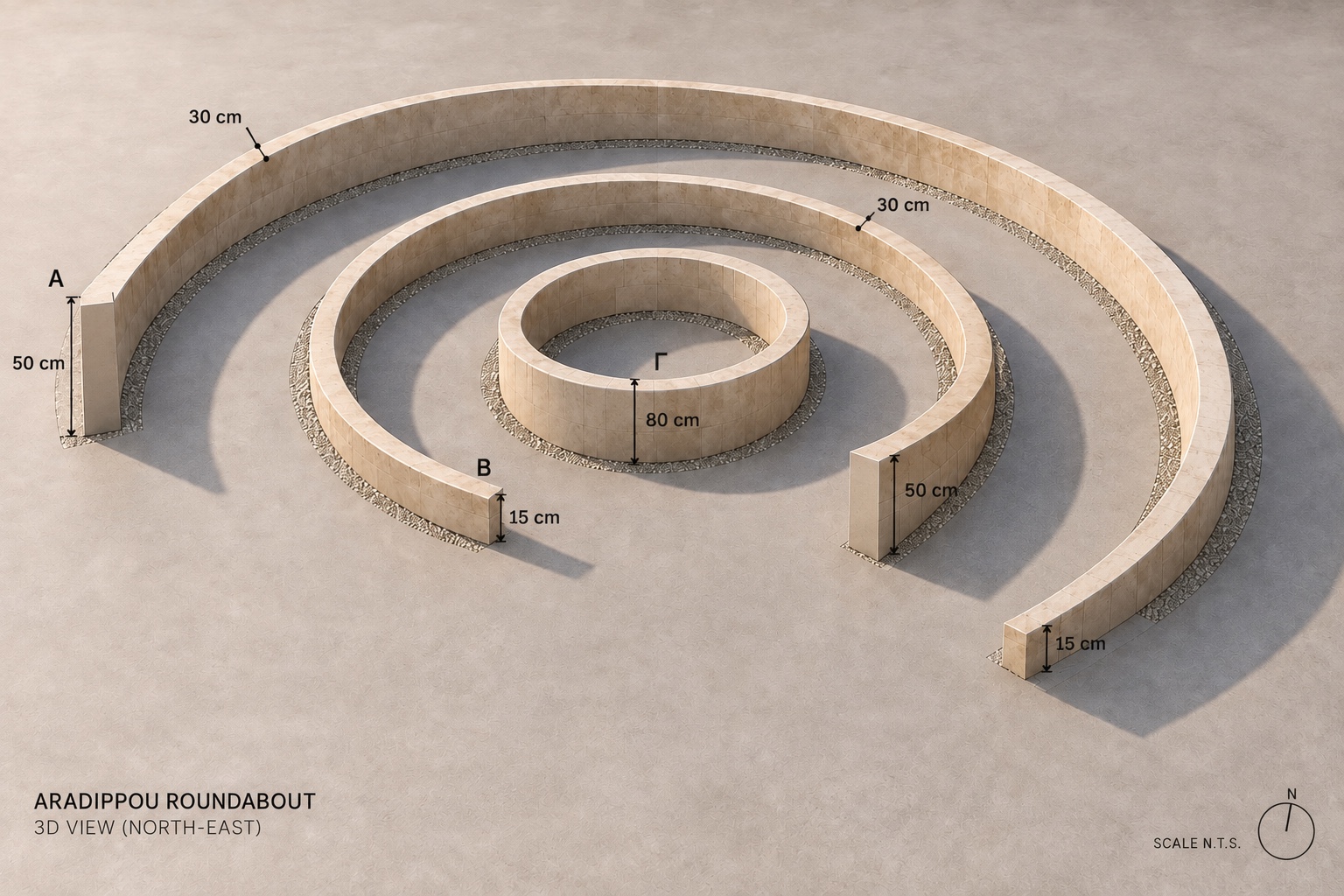
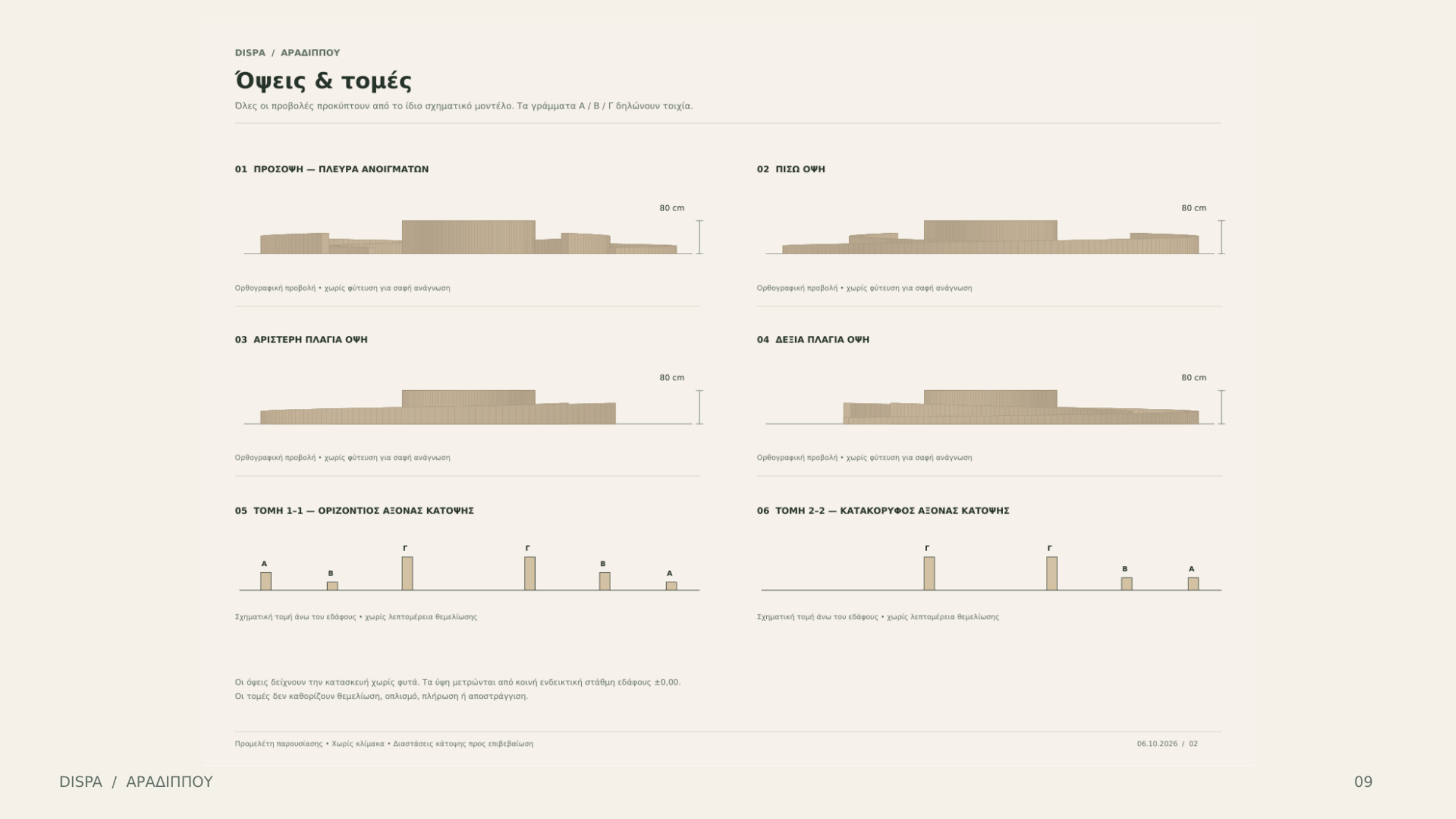
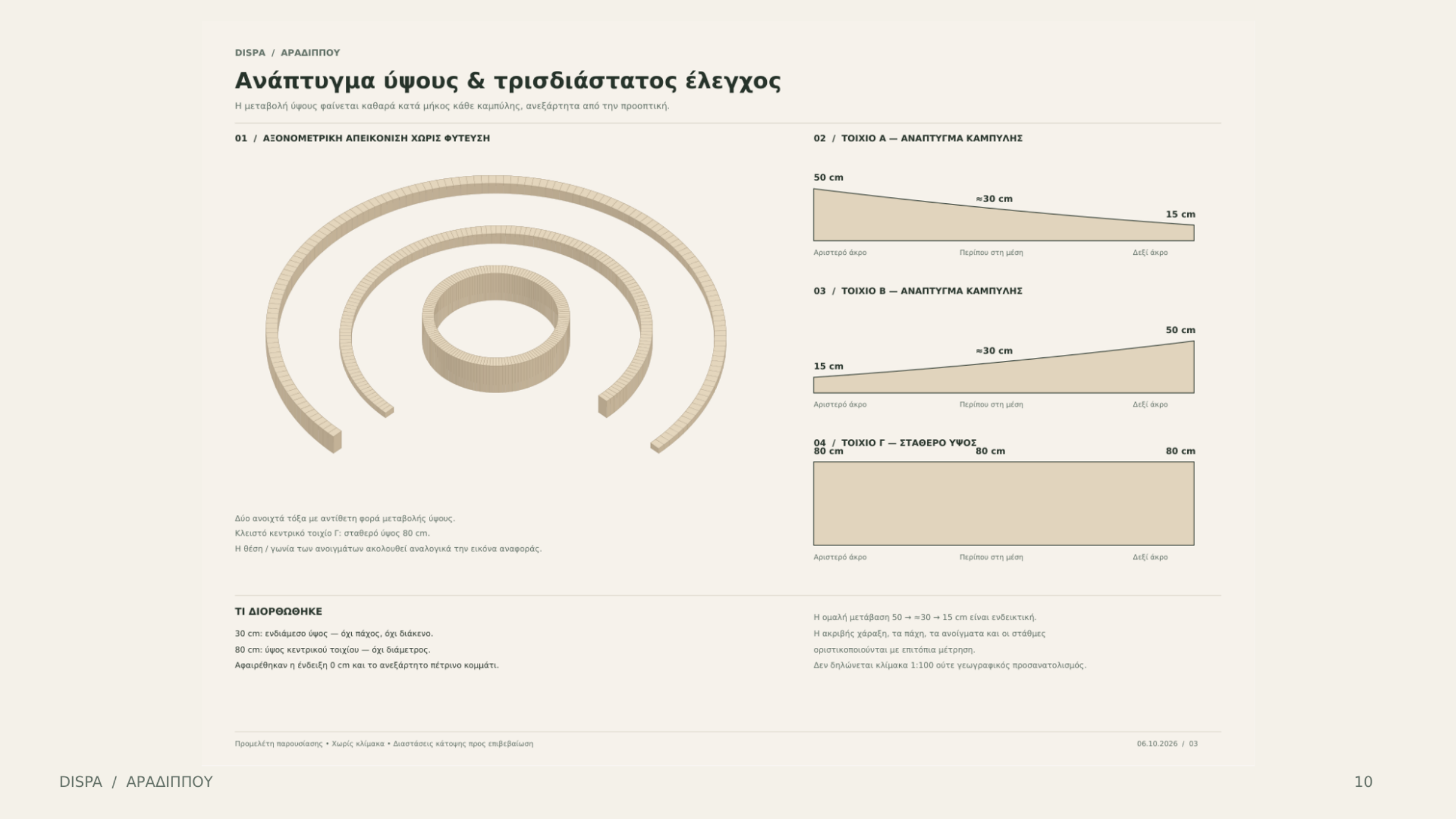
The proposal is organised through three concentric walls. The outer arc descends from 50 to 15 cm; the inner arc rises in the opposite direction from 15 to 50 cm; the central ring remains at a constant height of 80 cm. The drawings record the relationship between plan, elevation and movement around the circumference.
A sequence,
not an object.
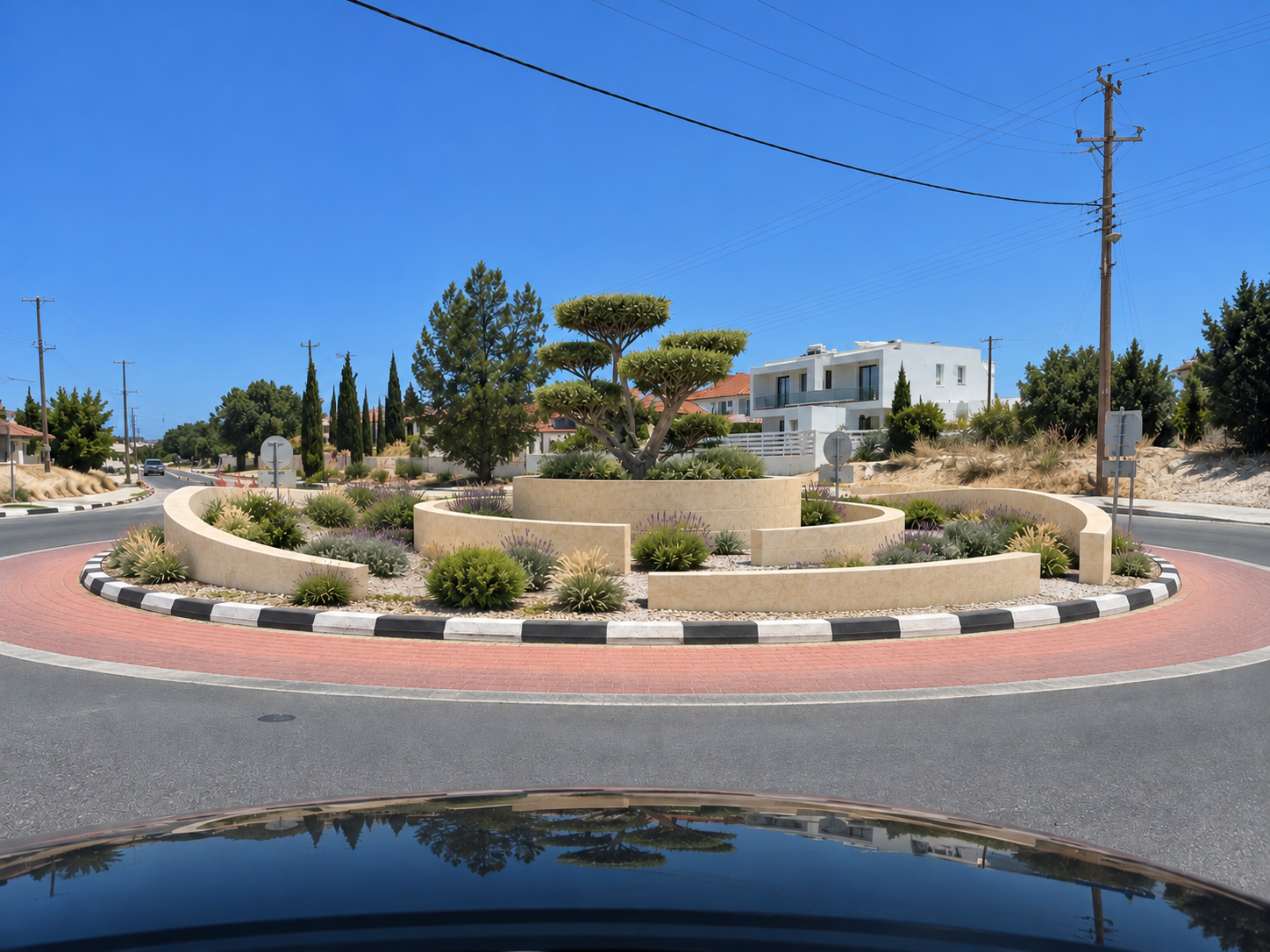
The geometry is organised through concentric arcs that never resolve into a single frontal composition. Their changing alignment produces depth through parallax: the foreground moves quickly, the inner planes appear more slowly, and the planted centre remains a recurring point of orientation.
The intervention is therefore read across time. Approach establishes the first partial view. Rotation brings the layers into and out of alignment. Departure leaves an incomplete image that is reconstructed during the next encounter.
Daylight
after dark.
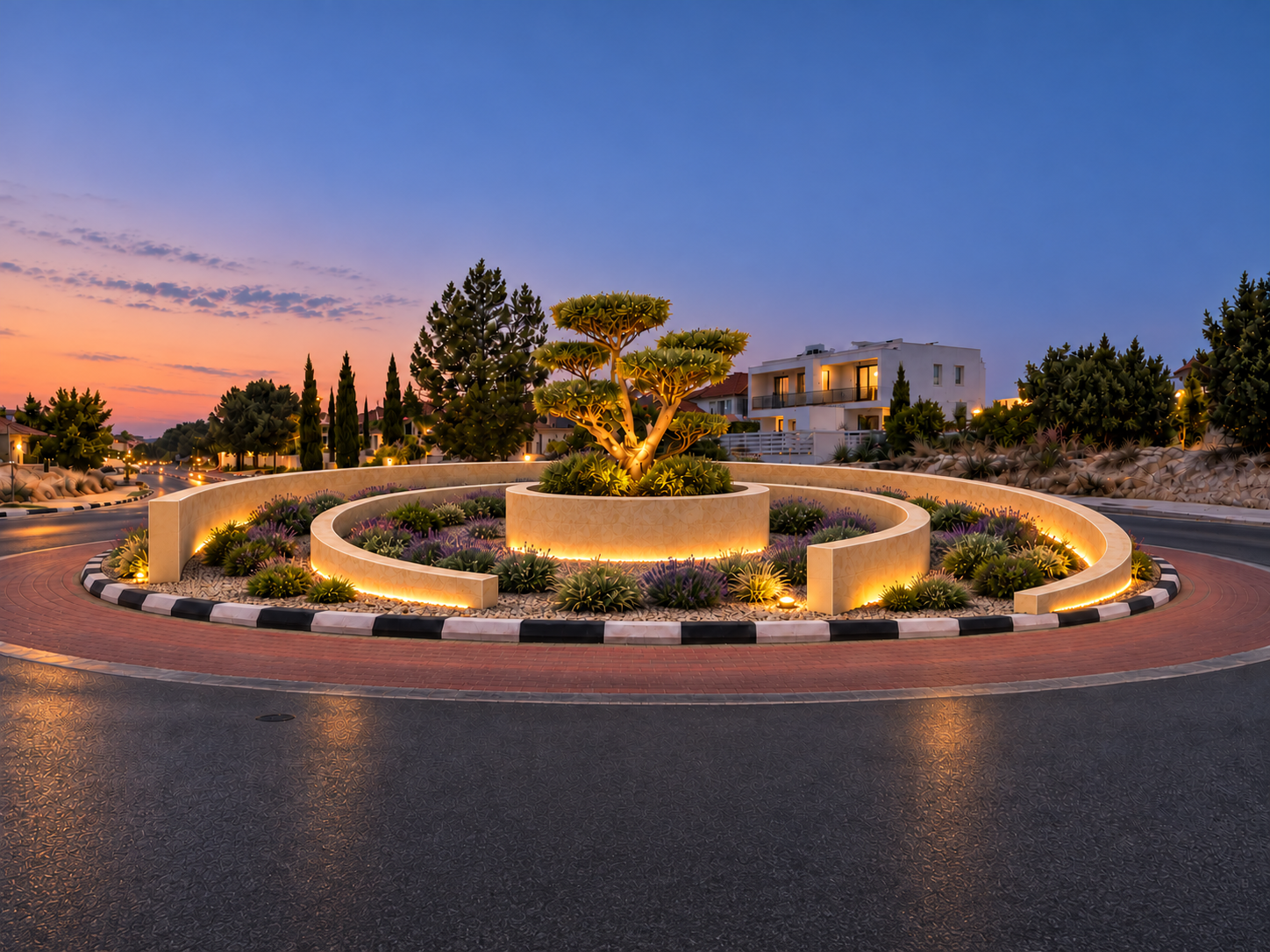
During the day, the proposal is defined by the weight of stone, the density of planting and the movement of shadow across the curved surfaces. At night, concealed linear light reverses this reading: mass recedes and the edges of the composition become visible.
Light is used as a spatial drawing rather than decoration. It clarifies depth, measures the concentric layers and changes the work without altering its physical geometry.